

PLANTS OF THE FUTURE.
Plant today. Understand tomorrow.
Protect forever.
Creating knowledge.
With go forest united, we want to develop a new approach to the restoration and revitalization of forests.
Because planting a forest is only the beginning. The forests of tomorrow need not only new trees, but also new knowledge, new technologies, and people who are willing to take responsibility together.
We want to understand where forest restoration makes the most sense, what conditions exist on the ground, which plants and tree species are suitable, and how a newly emerging ecosystem develops over many years.
To achieve this, we bring together forest restoration, satellite technology, artificial intelligence, scientific research, and local knowledge.
OUR NEXT STEPS
RESTORATION
We initiate and support real-world forest restoration projects.
FOREST INTELLIGENCE
Satellites, AI, climate, soil, biodiversity, and field data
DIGITAL FOREST PASSPORT
Every project receives a digital identity and a transparent development history.
FOREST LAB
Together with universities and research partners, project sites become long-term spaces for research and learning.
GLOBAL FOREST NETWORK
Individual restoration projects are connected to form a global network.
WHAT WE AIM TO DO
FROM TREES TO ECOSYSTEMS
Today, the success of many reforestation projects is primarily described by the number of trees planted.
We want to think beyond that.
For us, the question is not only:
How many trees were planted?
But also:
What emerges from them?
How does the vegetation develop?
How does the forest change?
Which species return?
How does the ecosystem respond to drought, heat, and other climate-related changes?
And what can we learn from these developments for future restoration projects?
TECHNOLOGY FOR THE FOREST
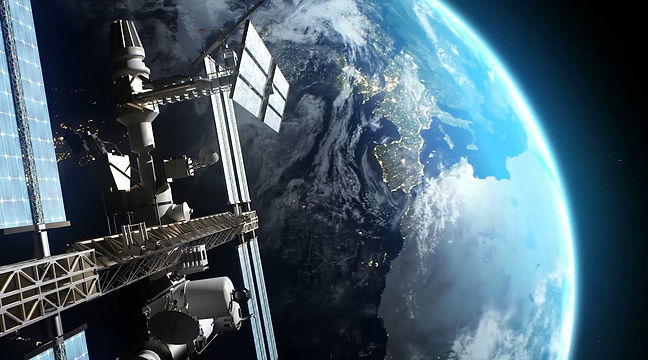
Modern satellites now provide increasingly detailed information about the Earth's surface.
We want to harness these capabilities for forest restoration.
Together with technology and research partners, we aim to combine satellite data, climate data, scientific knowledge, and information collected directly from project sites.
Step by step, this will create a digital Forest Intelligence System.
It is intended to help us:
-
identify suitable restoration sites,
-
better understand the condition of ecosystems,
-
scientifically monitor restoration measures,
-
observe changes over long periods of time,
-
identify risks and developments at an early stage,
-
and generate new knowledge from every project.
Technology is not an end in itself. Its purpose is to help us make better decisions for forests.
THE DIGITAL FOREST PASSPORT
Each of our future restoration projects will receive its own digital identity.
A Digital Forest Passport will document the history of a forest project, from its initial condition through its long-term development.
It can bring together information such as the location, area, plant species, restoration measures, scientific data, satellite observations, and ecological developments.
This creates something that is missing from many reforestation projects today:
A long-term, transparent story of the forest.
Not simply:
“10,000 trees were planted here.”
But:
“This is the forest we are restoring together — and this is how it is developing.”
WHERE RESEARCH MEETS FOREST RESTORATION
We want to develop our projects together with universities, research institutions, and scientific partners.
Because every restored forest can also become a place for learning.
We want to investigate which measures work, how ecosystems develop, and how new technologies can support ecological restoration.
Areas of interest include:
Biodiversity · Forest Ecology · Climate Resilience · Soil · Water · Biomass · Remote Sensing · Artificial Intelligence
Real-world restoration projects can thus become long-term spaces for research and learning.
THE FOREST AS A LIVING DATA SYSTEM
In the future, we want to complement satellite data with measurements collected directly in the forest.
Sensors could, for example, capture temperature, humidity, or acoustic signals.
This creates an increasingly comprehensive picture of the ecosystem:
Satellites see the forest.
Sensors measure the forest.
Science understands the forest.
People protect the forest
A NETWORK INSTEAD OF INDIVIDUAL PROJECTS
Our long-term goal is to create an international network of forest restoration projects.
Experiences and knowledge should be shared across different regions.
A restoration project in Europe can provide insights for a project in Africa.
A research project can support the development of another forest.
Technology partners can test new solutions.
Companies can support specific projects.
Local communities contribute their knowledge and experience.
This is how many individual projects can become a shared network for learning and impact.
OUR MODEL
UNDERSTAND
We analyze the landscape, ecosystem, and initial conditions.
PLAN
Together with local and scientific partners, we develop appropriate restoration approaches.
RESTORE
We support the restoration of forest ecosystems.
MONITOR
We track development using satellite and field data.
LEARN
We gather experience and scientific insights.
PROTECT
We use this knowledge to help create more resilient ecosystems for the long term.
OUR VISION
We envision a future in which forest restoration does not end with planting a tree.
It begins there.
A future in which we know where to restore, why we restore, what we plant, how the forest develops, and what we can learn from it.